At Mount House we believe that learning is for the real world, to enable human flourishing.
Curriculum Statement
“The curriculum at Mount House School aims to generate an enthusiasm for life-long learning and to stimulate intellectual curiosity in all our students. Our inclusive curriculum is nurturing, relevant and innovative, full of creativity and challenge. We seek to develop an understanding of and an appreciation for diversity in every sense, and use local, national and global contexts to help achieve this aim. It offers variety and provides opportunities for all students to find their passion and to develop their skills to realise their potential, so that they can pursue individual and collective ambitions for their futures.”
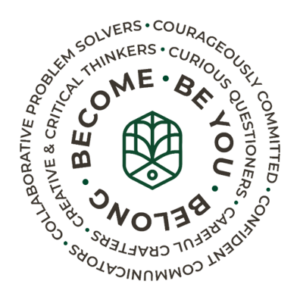
The learners we aim to develop are:
- Exploration: Curious questioners
- Research: Careful crafters
- Mastery: Creative & critical thinkers
- Resilience: Courageously committed
- Oracy: Confident communicators
- Solutions: Collaborative problem solvers
Mount House is an inclusive and intentionally all-ability school and, in a warm community, develops each student’s awareness of their own personal worth and uniqueness. This is the school’s ethos and is the driving force behind the curriculum, which is designed to promote an intrinsic love of learning. We expect our students to be self-reflective, to think, and to engage with different perspectives.
Years 7 – 9
From Years 7 to 9 students study a broad and balanced curriculum. We value the creative and performing arts and they are as crucial a part of the curriculum as core subjects and the humanities, while all students study two languages in Years 7 & 8.
Sport and Music are enjoyed across our year groups, with access to a variety of sports facilities and our school hall and drama studio as performance spaces. This provides the perfect learning environment for students to thrive, whether they are beginners or elite performers. We place a strong emphasis on developing both collaborative skills as well as independent learning and academic understanding to prepare students for their GCSE studies.
In Year 9 students have the opportunity to opt for Global Studies as well as having timetabled PSHE classes.
Students also have the opportunity to explore the world beyond the classroom with trips, cross-curricular activities, and our Activities Week provision which all foster resilience and a sense of adventure. Our extensive co-curricular provision affords further opportunities for exploring areas beyond the formal curriculum, ignitinhg students’ interests and fueling their passions. You can see more details of our co-currcular clubs here.
Years 10 – 11
In Years 10 and 11 we offer a range of subjects that allows students to enjoy a broad and balanced curriculum that strives to develop each individual to their full potential. The range of subjects coupled with the ability to adapt the curriculum offer for students, helps us to ensure we are both valuing talents and responding to specific needs,within the context of a broad and balance programme.
Generally speaking, our Year 10 and 11 students’ study between 8 and 9 GCSEs. We have a GCSE core of English Language, English Literature, Mathematics, and Biology, Chemistry and Physics (leading to three separate iGCSEs or the Dual Science Qualification which is equivalent to two GCSEs). Further to this we encourage our students to take a language, and most will also opt for a humanities subject too. They can then choose from a wide range of further options including Computer Science, PE, Business Studies, Music, Drama, Food & Nutrition, and Art.
All Year 10 and 11 students also take timetabled PSHE classes and Sports afternoons to support their wellbeing and health.
Beyond their studies we encourage students to broaden their minds by exploring interests outside their examined subjects. This may be through guest speakers, trips or our broad co-curricular programme which is an excellent way to stretch and challenge the areas they are most interested in.
Digital Curriculum
From November 2026 all students will have laptops so that digital platforms and AI can be utilised effectively. Whilst we are a smart phone free school, we also believe that technology can enhance learning and is vital for the world beyond school, when used it occupies the role of a servant not a master. Our approach to real world learning means that we ensure all students leave school with all the requisite skills for life in an AI age, whilst also having a keen understanding of the need for a healthy and balanced approach to digital technology. The combination of our Computer Science lessons and our PSHE programme ensures that students have a healthy and safe approach. As a small school we are also agile and able to adapt to new research, trends and technology as it emerges which is all the more important in such a rapidly evolving world.
Learning to Learn Pathway
We believe that Teaching is values, skills, knowledge and learner attributes mediated and fostered through teacher personality so that students are enabled to flourish in the real-world. As such excellent teaching produces excellent learners who will flourish in life beyond school. To this end, our teaching and learning focus this year will be organised around learning to learn, which studies have shown to make a significant impact on students’ progress. Our intention is that students across the school will build their learning power by cultivating attitudes and attributes which will enhance their effectiveness as learners. We recognise that all our students are uniquely gifted and we want each to grow their particular strengths. At the same time, we will ensure that every student is equipped with the tools they need to succeed within the examination system, narrowly defined as that currently is. There are a number of elements to this.
Firstly, we are embedding the VESPA mindset across the school. VESPA stands for:
V – Vision (Does the learner know what they want to achieve or progress to)
E – Effort (How much effort does the learner put into their studies)
S – System (How well does the learner organise their resources)
P – Practice (How well does the learner develop their own skills to progress)
A – Attitude (How well does the learner respond to feedback and setbacks)
It is an evidence based non-cognitive skills framework which we will be incorporated across the school. More information about this will follow in due course, but you can read more about the framework at this link.
Oracy Pathway
Students need to become confident communicators if they are to succeed in their relationships and roles beyond school, and this pathway is designed to enable our students to develop the skills they need to flourish.
Students in Years 7 – 9 will receive one lesson a fortnight in which oracy skills will be taught through interesting and topical issues. In year 10 a core oracy component will be integrated into our new enrichment programme. As part of this strategy, all students will be taught debating skills that can then be used across the curriculum and to prepare interested students for entering debate competitions. Students will become real-world ready by learning the nuances of communicating in different contexts from the classroom to the board room and from podcasts to interviews and Zoom meetings. As such it will also form an important component in our careers and futures programme.